How to Improve Your Golf Practice Efficiency?

Time:2026-09-20 Author:Sophia
0%

Improving golf practice is not about hitting more balls. It is about creating better learning opportunities. The R&A’s Golf Around the World 2023 report recorded 66.6 million golfers outside the United States and Mexico. The National Golf Foundation also reported 28.1 million on-course golfers in the United States during 2023. These figures show a large, active market. They do not prove that golfers practice effectively.

Mark Broadie, Columbia Business School professor and strokes-gained researcher, has said, “The biggest surprise was how many strokes golfers lose from 100 yards and in.” His research, published in Every Shot Counts, supports a practical shift toward approach shots, short-game decisions, and putting. This evidence helps answer how to improve practice efficiency in golf training. A session should resemble real play, not endless shots from one perfect lie. Hit three wedge shots to different targets. Change the distance. Record proximity, strike quality, and decision errors.

Keep it measurable.

A golfer might spend 20 minutes on wedges, 15 minutes on putting, and 10 minutes rehearsing uneven lies. That structure is useful, but it is not universally correct. Skill level, injury history, equipment, and course demands can change the priority. I have also found that tracking every result can interrupt feel and enjoyment. That weakness deserves attention. Efficient practice needs feedback, yet too much feedback can create hesitation. Use one clear goal per block, review the results briefly, and adjust the next session. Golfers should test progress on the course, under pressure, with imperfect lies and limited time. Practice must transfer. Otherwise, it is only exercise.
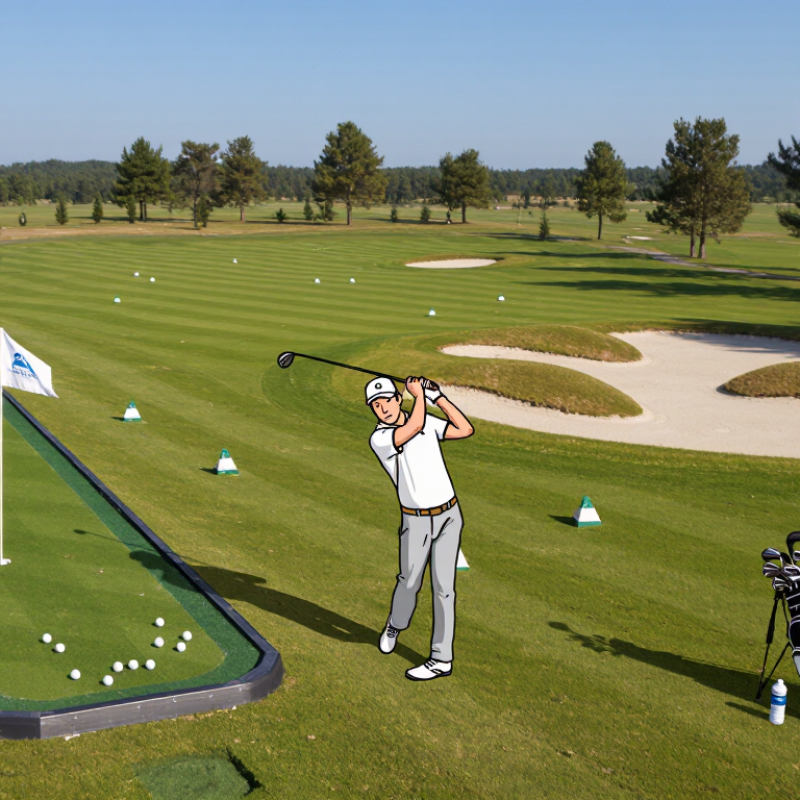
How to Improve Your Golf Practice Efficiency?

Define Clear Practice Goals and Measure Your Current Golf Skills

How to Improve Your Golf Practice Efficiency?

Define Clear Practice Goals and Measure Your Current Golf Skills

Efficient golf practice begins with a specific goal, not a large bucket of balls. A vague plan creates busy movement without useful feedback. Write one target before each session, such as improving fairway accuracy or controlling a six-meter putt. Keep it measurable. Record successful attempts out of ten. In my own practice, counting results exposed weaknesses that felt invisible during play. That small change improved my focus.

Before changing your swing, measure your current skills honestly. Record ten drives and note carry distance, shot direction, and contact quality. For putting, track how many attempts finish within a one-meter circle. Use the same club, target, and conditions when possible. Do not trust memory. Your memory lies. A simple phone video can reveal poor alignment, excessive movement, or an unstable finish. A qualified coach can also identify technical issues that numbers cannot explain.

Turn the measurements into a short practice routine. If six drives miss right, spend fifteen minutes checking clubface control instead of practicing random swings. Recheck the same test after several sessions. Improvement may appear slowly, and that can feel disappointing. I sometimes changed drills too quickly and lost useful evidence. Leave room for mistakes. A missed shot can show whether your goal was realistic, your method was suitable, or your attention simply faded. Keep notes on energy, weather, and pressure, because performance rarely depends on technique alone.

How to Improve Your Golf Practice Efficiency?

Define Clear Practice Goals and Measure Your Current Golf Skills

Use measurable performance indicators to plan focused practice sessions. This example compares a golfer’s current tracking baseline with practical improvement targets for driving accuracy, greens in regulation, scrambling, and three-putt avoidance.

Build a Balanced Routine for Technique, Strategy, and Physical Training

Efficient golf practice starts with balance, not endless repetition. A strong routine should develop technique, strategy, and physical readiness together. The R&A’s Golf and Health Report notes that an 18-hole round can involve four to five hours and roughly 8–12 kilometers of walking. Practice should prepare your body for that demand. Begin with ten minutes of mobility, including hip rotations, shoulder circles, and controlled trunk turns. Then hit short shots before full swings. This creates useful movement instead of forcing speed too early.

Technical work needs a clear purpose. Choose one skill, such as improving contact with a seven-iron, and limit the drill to 20 minutes. Track solid strikes, launch direction, and shot shape. Do not chase perfect numbers. The 2023 World Handicap System participation report showed that scoring data can reveal progress more reliably than memory alone. After technical practice, play simulated holes. Change clubs, targets, and lies. Strategy becomes clearer under uncertainty.

Physical training should remain practical. Two weekly strength sessions can support balance, leg control, and rotational power. Add brief aerobic work when your schedule allows. The World Health Organization recommends 150 minutes of moderate activity weekly for adults, but golfers may not reach that target consistently. I often spend too long adjusting my swing and neglect recovery. That mistake still appears. Leave one practice session for putting, breathing, and decision-making. Shorter sessions can feel less impressive, yet they often expose the habits that longer sessions hide.

Use Focused Drills to Improve Specific Golf Skills Efficiently

How to Improve Your Golf Practice Efficiency?

Focused practice starts with one measurable problem, not a full bucket of random swings. Choose a single skill, such as a 30-yard pitch, face control, or three-meter putting. The National Golf Foundation’s 2024 Golf Participation Report recorded 28.1 million on-course golfers in the United States during 2023. With limited practice time, targeted work matters. Hit ten shots toward a small landing zone. Record carry distance, direction, and contact quality. Then adjust only one variable. For pitching, keep the same target while changing swing length. This creates useful feedback instead of confusing noise. Keep it simple.

A practical session can use three blocks: technique, pressure, and transfer. Spend ten minutes rehearsing the movement slowly. Then hit ten balls while following a clear scoring rule. For example, award one point when the ball finishes within three meters of the target.

The R&A’s Golf Around the World 2023 report estimated 66.6 million golfers globally, showing how widely the sport is practiced. Yet more practice does not guarantee better performance.

I sometimes overvalue perfect contact and ignore poor decisions. That mistake is common. Finish by playing six imagined holes with one ball. Change targets, lies, and club choices. Track decisions, not just results. Review the session afterward, and remove drills that produce no clear improvement.

Track Practice Results and Adjust Your Training Plan

Efficient golf practice begins with honest tracking, not longer sessions. After each practice, record the club used, target distance, shot result, and strike quality. I also note wind, fatigue, and the number of successful shots. These details reveal patterns that memory often hides. A simple notebook works well. Keep the data consistent.

Review the results every seven days. If only four of ten approach shots reach the intended area, keep that distance in your plan. Reduce technical changes and focus on repeatable contact. When short putts improve, spend less time repeating them. Use that time for lag putting or uneven lies. Adjust one variable at a time, so the reason for improvement remains clear.

My practice records are not always neat. I sometimes forget the exact distance or mark a poor shot too quickly. That weakens the value of the data. I now pause after each group of shots and write a brief note. Video can support this process, but it should confirm a pattern rather than create anxiety. A qualified coach can review the records and challenge my assumptions. Progress still feels uneven. That is useful information.

Apply Practice Lessons During Real Rounds and On-Course Situations

How to Improve Your Golf Practice Efficiency?

Apply Practice Lessons During Real Rounds and On-Course Situations

Efficient golf practice should prepare you for decisions, not just perfect swings. The real test begins when the scorecard is open. After each drill, play several shots toward different targets. Change the club, distance, or lie when possible. I often hit better balls on the range than on the course. That mistake taught me something.

During a round, choose one practice focus instead of fixing everything. Before each shot, identify the target, expected ball flight, and safest miss. Use one rehearsal swing that matches the shot. Then commit. Track the result without judging yourself too quickly. A pulled iron may come from alignment, poor contact, or tension. Guessing wastes useful information.

Practice games can copy on-course pressure. Try to hit three fairway targets from uneven lies, then record every miss. Give yourself one point for a safe target and two for a precise shot. Keep the routine consistent. This reveals whether your technique survives pressure. It also exposes weak decision-making. I once discovered that my alignment routine disappeared when I felt rushed. That was uncomfortable. Now I include a short routine in practice and during casual rounds. A qualified coach can review patterns, but honest notes are valuable too. Your practice plan may need changing.

How to Improve Your Golf Practice Efficiency? — Apply Practice Lessons During Real Rounds and On-Course Situations
Practice Area Practice Method Suggested Practice Dose Transfer Test Before Playing On-Course Application Performance Data to Record
Pre-shot Routine Use the same sequence for every shot: assess the lie and target, select the club, make one rehearsal, visualize the shot, then commit. 15 minutes; rehearse the routine with 12 different targets and lies. Complete the routine in 20–30 seconds without adding extra swings. Use the routine on every full shot and record whether the decision was clear before addressing the ball. Routine completed: yes/no; target selected; hesitation or rushed decision.
Variable-Target Practice Change the target, club, distance, and shot shape after each attempt instead of hitting a large number of identical shots. 24 balls; no more than 3 consecutive shots with the same club or target. At least 16 of 24 shots finish within the intended target zone. Choose a different target and club on each hole according to the hole design, wind, lie, and trouble areas. Target-zone hits; club selected; miss direction; lie and wind conditions.
Tee Shots Practice selecting a tee-shot target that leaves a playable next shot rather than automatically aiming at the center of the fairway. 12 tee shots: 4 wide targets, 4 narrow targets, and 4 shots requiring a conservative line. Record both finish position and next-shot angle; a playable miss counts as a useful outcome. On the course, identify the main penalty area or difficult recovery side and aim away from it when the risk is not justified. Fairway or playable area; penalty or recovery shot; expected versus actual result.
Approach Shots Practice aiming at a safe section of the green and choosing the club for the total distance, wind, lie, and front or back hazards. 18 shots from mixed distances; include short-sided and long-sided targets. Measure proximity to the selected target, not only whether the ball reaches the green. Before each approach, identify the safest miss and avoid firing at a tucked flag when the surrounding penalty is high. Green hit; proximity to target; short/long/left/right miss; recovery required.
Uneven Lies Practice uphill, downhill, sidehill, and rough lies while changing setup and choosing a realistic landing area. 16 shots; 4 balls from each lie type with one defined target per lie. Judge the likely strike and trajectory before swinging; record the actual launch and finish. On the course, accept a shorter or safer shot when the lie makes the original target unrealistic. Lie type; intended trajectory; strike quality; carry result; recovery or penalty.
Wedge Distance Control Use a small set of repeatable swing lengths and practice landing the ball on a selected landing area. 30 balls across 3 distances; 10 balls per distance with a specific landing zone. Count how many balls finish inside a defined distance window around the target. On the course, select the landing area first and allow for rollout instead of judging success only by the final flag distance. Carry distance; total distance; landing-zone result; miss direction; lie and wind.
Bunker Play Practice entering the sand at a consistent point behind the ball and landing the ball on a safe part of the green. 12 shots from varied lies; include a standard lie and at least one difficult lie. Record whether the ball exits the bunker and whether it finishes inside the planned safe zone. During a round, choose the lowest-risk recovery target and use enough margin for the lip, sand condition, and green slope. Exit success; first-putt distance; bunker saves; heavy or thin contact.
Putting Speed Putts from different distances to a broad target area, focusing first on pace and then on start line. 24 putts: 8 short, 8 medium, and 8 long putts from different slopes. Record three-putt risk and the distance remaining after the first putt. On the course, read the overall slope, select a pace goal, and accept a tap-in distance rather than forcing the ball at the hole. First-putt distance; three-putts; leave distance; start-line error.
Pressure Simulation Create consequences for missed targets, such as restarting a hole simulation or changing the next target. Play 9 simulated holes using one ball and a complete pre-shot routine. Track decisions and process quality separately from score; avoid changing technique after one poor shot. Use the same response after mistakes: assess the lie, choose the highest-percentage option, and commit to the next shot. Score; penalty shots; decision quality; recovery success; emotional response.
On-Course Practice Round Play one ball with a specific objective, such as conservative targets, wedge distance control, or eliminating rushed decisions. 9 or 18 holes; select one process goal before starting. Review the round by process statistics rather than score alone. Apply one practice skill on every relevant hole and write a short note immediately after the shot or hole. Fairways or playable tee shots; greens hit; up-and-down attempts; putts; penalties; process adherence.
Post-Round Review Identify the largest scoring leak and connect it to one practice drill for the next session. 10 minutes after each round; review no more than two priority areas. Compare the planned objective with actual on-course evidence before changing technique. Convert recurring misses into a specific practice task, then retest that task in a future round. Recurring miss; situation; likely cause; selected drill; result in the next round.
Measurement principle: A practice result is more useful when it includes the target, the situation, the miss pattern, and the decision made—not just the number of balls hit or the final score.

FAQS

How should a golfer structure an efficient practice session?

Start with ten minutes of mobility, including hip rotations, shoulder circles, and controlled trunk turns. Hit short shots before full swings. Choose one technical skill and limit it to 20 minutes. Finish with simulated holes or putting. Keep it simple.

Why should golfers avoid endless repetition?

Repeating one shot can hide poor decisions and weak movement patterns. Change targets, clubs, distances, and lies. Practice should resemble the uncertainty of a real round. Perfect range swings can be misleading.

What technical details should golfers track?

Record solid strikes, launch direction, and shot shape. Scoring patterns may show progress better than memory. Do not chase perfect numbers every session. Some notes will be incomplete, but they still reveal habits.

How can practice prepare golfers for course decisions?

After a drill, hit shots toward different targets. Identify the target, expected flight, and safest miss before each shot. Use one rehearsal swing matching the intended shot. Then commit.

What is a useful pressure practice game?

Hit three fairway targets from uneven lies. Give one point for a safe target and two for a precise shot. Record every miss without instantly blaming technique. This exposes decision-making under pressure.

How can golfers use practice during an actual round?

Choose one focus instead of repairing every flaw. Keep the same short pre-shot routine before each ball. Track results calmly after the shot. Rushed alignment can quietly ruin good contact.

What physical training supports golf practice?

Two weekly strength sessions can support balance, leg control, and rotational power. Add brief aerobic work when your schedule permits. An 18-hole round may involve four to five hours and eight to twelve kilometers of walking. Recovery still matters.

What should golfers do when practice time is limited?

Use a shorter session with mobility, one focused drill, and several simulated holes. Reserve another session for putting, breathing, and decisions. Short practice can expose habits longer sessions hide. I still overwork my swing sometimes.

Conclusion

Improving golf practice efficiency begins with setting clear, measurable goals and evaluating your current abilities in areas such as swing technique, short-game control, putting, course management, and physical fitness. A well-designed routine should balance technical practice with strategic decision-making and exercises that support strength, mobility, balance, and endurance. Instead of hitting balls without a specific purpose, use focused drills that target one skill at a time, establish a simple performance measure, and maintain full concentration throughout each session. This is a practical foundation for understanding how to improve practice efficiency in golf training.

To make consistent progress, record key results, identify recurring weaknesses, and adjust your training plan according to evidence rather than habit. Practice should also transfer to real rounds by recreating pressure, uneven lies, changing distances, and decision-making situations on the course. Reviewing each round can reveal which skills require more attention, helping you create a flexible cycle of practice, evaluation, and improvement.

Sophia

Sophia

Sophia is a dedicated marketing professional with an exceptional depth of knowledge about her company's products and services. With a keen understanding of market trends and customer needs, she crafts insightful blog posts that not only inform but also engage readers, enriching the company’s online......